
Backlit Trade Show Displays: Types, Differences & How to Choose
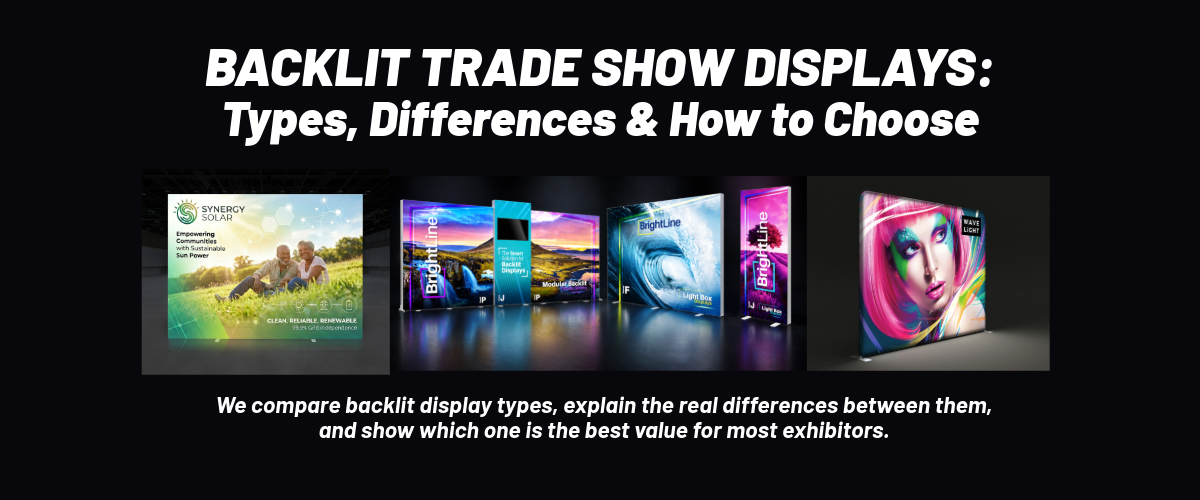
Backlit trade show displays are exhibit graphics lit from within by LED lighting, so your artwork glows and stands out on a crowded show floor. The main types are SEG (silicone edge graphic) displays, tension-fabric displays, edge-lit light boxes, and portable hop-up displays — and the technology you choose determines how even the glow looks, whether you get hotspots, and what it costs.
This guide compares every backlit display type APG Exhibits offers, explains the real differences between them, and shows which one is the best value for most exhibitors.
What are backlit trade show displays?
Backlit trade show displays use LED lighting behind or along the edge of a fabric or printed graphic to illuminate the artwork from within. The internal lighting makes colors more vivid and text readable from across the aisle, helping a booth stand out even under bright convention-center lighting where standard printed displays fade into the background.
What are the different types of backlit trade show displays?
There are four main types of backlit trade show display, and they differ mainly in how the light reaches the graphic:
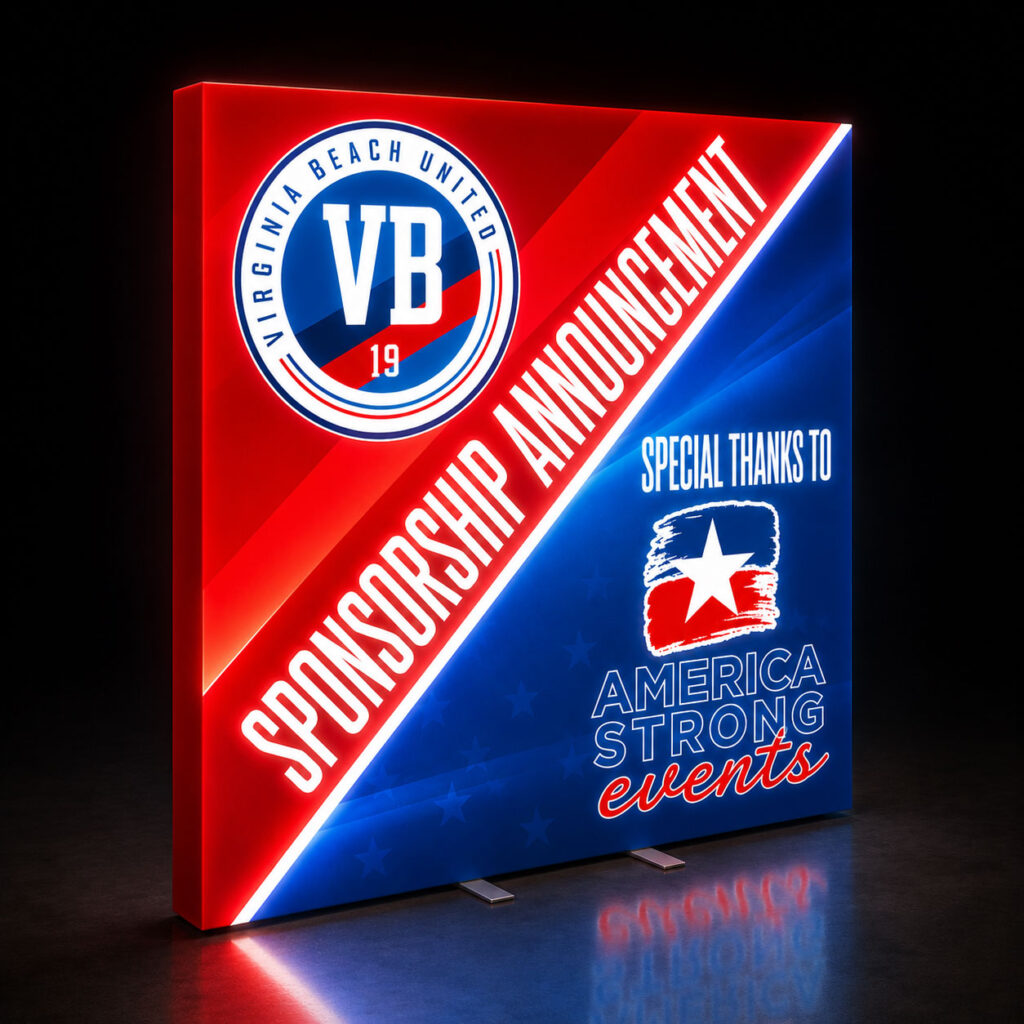
- SEG displays (BrightLine): Silicone-edge fabric in an aluminum frame with engineered, diffused lighting for a seamless, even glow.
- Tension-fabric displays (WaveLight): A fabric graphic over a tube frame with LED strips hung inside the frame.
- Light boxes (Vector): Rigid aluminum-extrusion frames with edge lighting for a poster-like panel.
- HopUp & pop-up displays (Embrace, HopUp): Collapsible frames with push-fit fabric and LED kits, built for portability.
The key distinction is edge-lit and diffused versus directly lit from behind. Edge-lit and diffused systems spread light evenly; systems with LEDs mounted directly behind the fabric can show hotspots or visible light lines if they aren’t diffused. That difference is what the sections below break down.
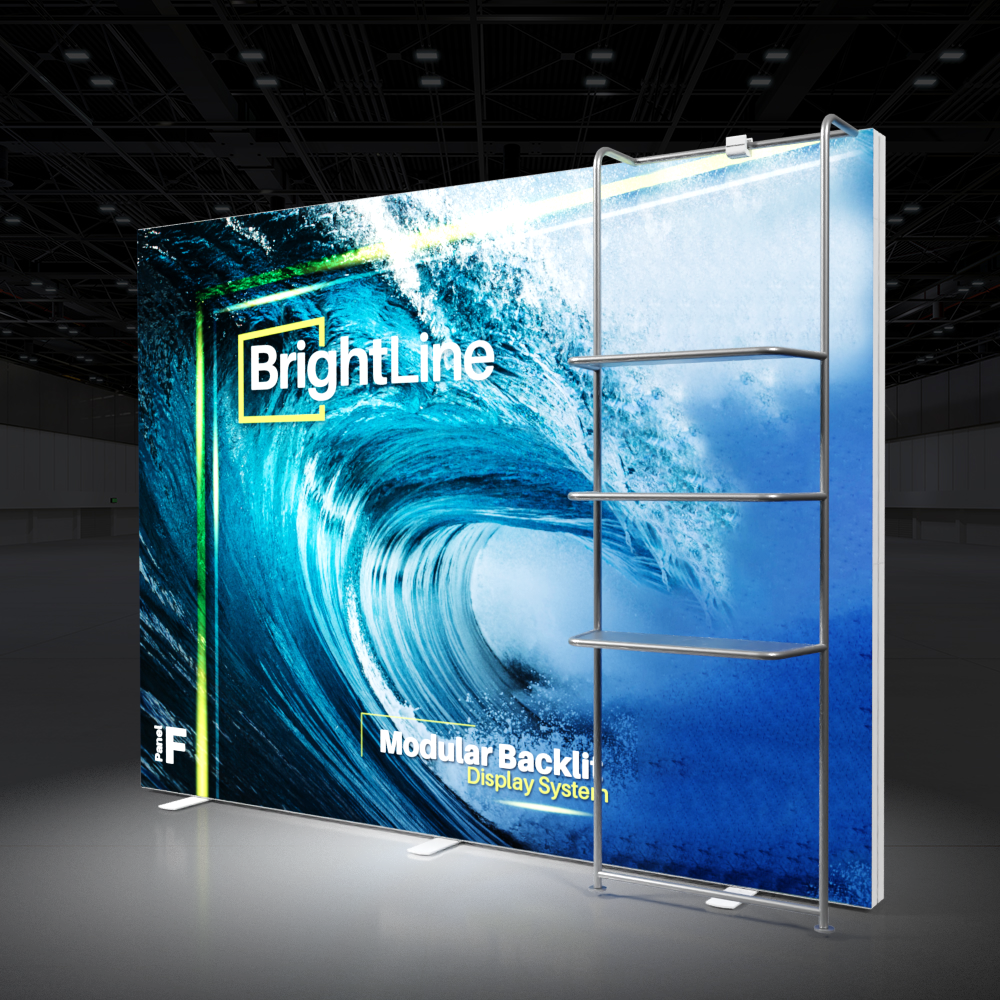
What are SEG BrightLine displays?
SEG BrightLine displays use Silicone Edge Graphics — a dye-sublimated fabric print finished with a thin silicone strip that press-fits into a channel in the aluminum frame. The fabric sits perfectly flush and taut, creating a seamless, frameless, edge-to-edge look with no visible hardware and an even, hotspot-free glow.
Because the LEDs and diffusion are engineered into the frame, BrightLine SEG displays avoid the visible light arrays that can affect other backlit styles. Key advantages include:
- Seamless SEG finish — silicone-edge fabric sits flush for a clean, premium look.
- Even, hotspot-free illumination from engineered lighting and diffusion.
- Double-sided capable — frames can display graphics on both sides, ideal for islands and hanging signs.
- Flexible configurations from inline backwalls to large islands.
- Easy graphic swaps — push-fit graphics replace without buying a new frame.
Best value: BrightLine SEG displays deliver the premium, seamless glow most exhibitors picture when they imagine a backlit booth — at a price point that makes them the best overall value in the backlit lineup.
How do WaveLight backlit displays work?
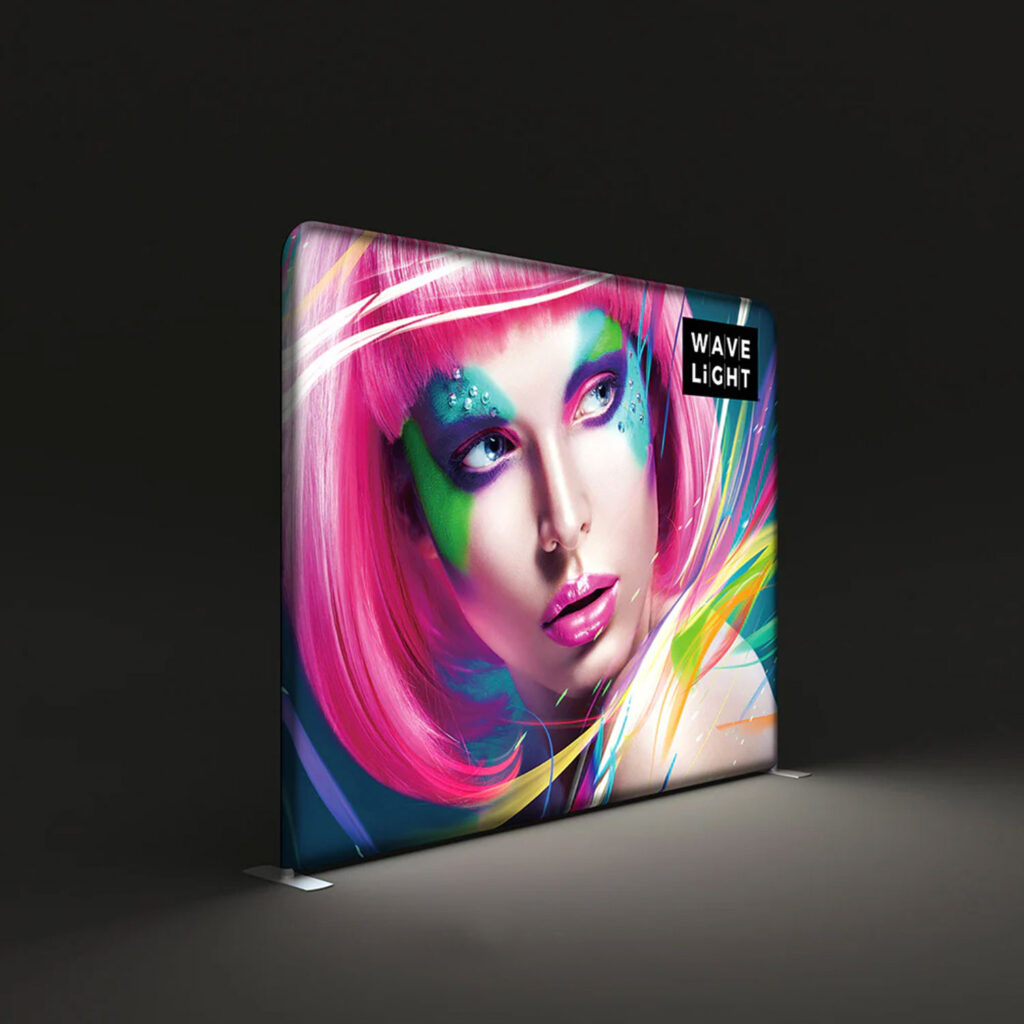
WaveLight backlit displays use a lightweight anodized-aluminum tube frame with a tension-fabric graphic pulled over it, and LED light strips that hang inside the aluminum piping — attaching to the frame much like blinds hang in a window. They are portable, affordable, and eye-catching when configured well.
Because the LEDs sit directly behind the fabric rather than edge-lit across a diffuser, WaveLight displays have a few trade-offs worth knowing:
- Potential for hotspots — without a diffuser panel, light can look brighter in spots rather than perfectly even.
- Visible light arrays — on graphics with large areas of white or pale color, the LED strips behind the fabric can sometimes show through.
- Single-sided only — WaveLight is not built for double-sided illuminated graphics.
These effects are largely manageable with smart graphic design (avoiding large expanses of pale color) and by specifying a diffuser panel where available. For a portable, budget-friendly illuminated fabric display, WaveLight is a solid choice.
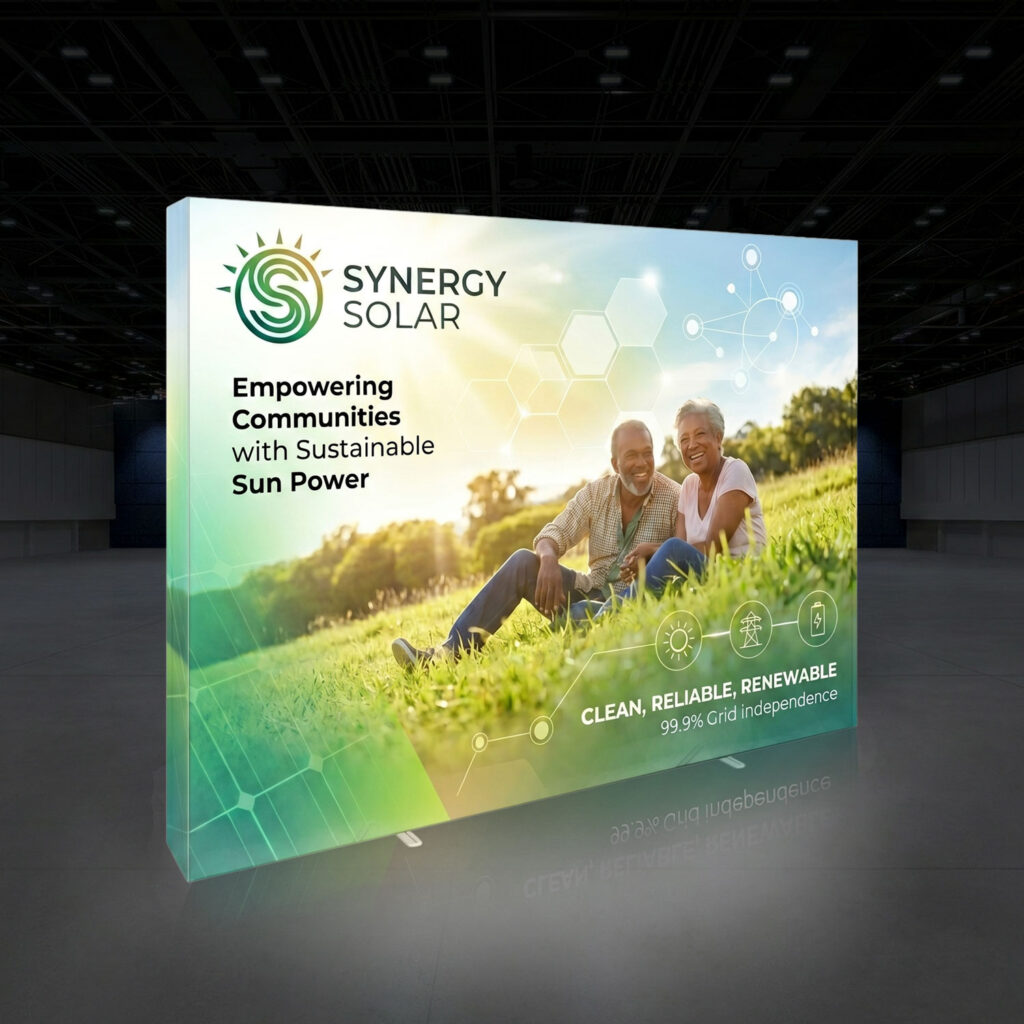
What are Vector Light Boxes?
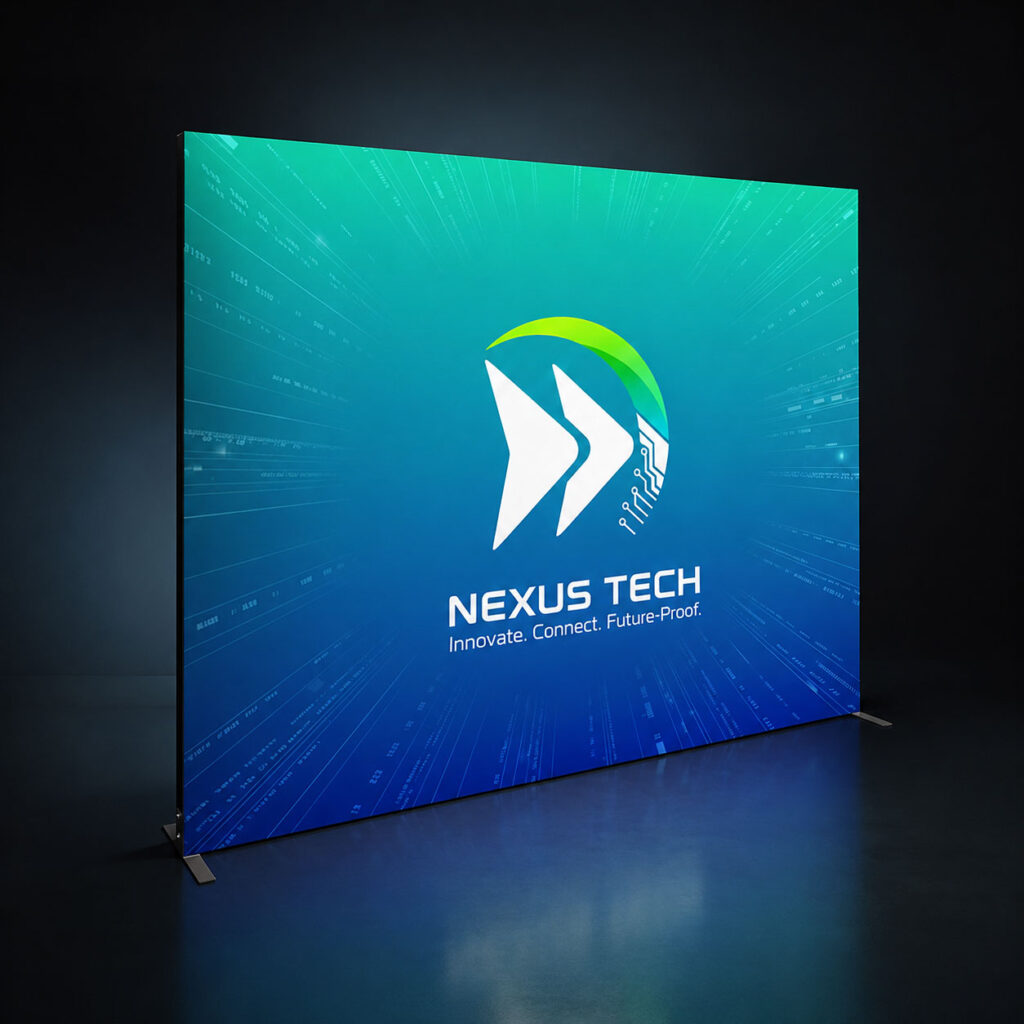
Vector Light Boxes are a rigid lightbox system: durable aluminum-extrusion frames with push-fit SEG-style graphics illuminated by LED edge lighting. The edge-lit design casts light evenly across the graphic for a clean, poster-like panel, and the heavier extrusion makes them a sturdy, upscale option.
Vector Light Boxes are a strong pick when you want a substantial, freestanding illuminated panel or a bank of light boxes built into a backwall.
What are Embrace and HopUp backlit displays?
Embrace and Hop-Up backlit displays combine a collapsible frame with push-fit fabric graphics and an LED light kit, built for maximum portability. They set up fast, pack down small, and give a smaller booth an illuminated look without a heavy or complex build.
The Embrace uses lightweight anodized-silver frames with push-fit fabric, while the Backlit Hop-Up pairs a collapsible aluminum frame with dye-sublimated graphics and LED backlighting. Both are ideal for exhibitors who travel frequently.
Backlit display comparison at a glance
| Display | Technology | Illumination | Double-Sided? | Best For |
|---|---|---|---|---|
| BrightLine (SEG) | Silicone Edge Graphics in aluminum frame | Even, hotspot-free glow | Yes | Best overall value; premium seamless look |
| WaveLight | Tension fabric over tube frame; hanging LED strips | Can show hotspots / visible arrays without a diffuser | No | Budget-friendly, portable fabric displays |
| Vector Light Box | Aluminum extrusion, push-fit graphic, LED edge lighting | Even, poster-like | Varies by config | Sturdy, upscale freestanding light boxes |
| Embrace / HopUp | Collapsible frame, push-fit fabric, LED kit | Even, portable | No | Frequent travelers who need fast setup |
Which backlit display is best?
For most exhibitors, a BrightLine SEG display is the best backlit display because it delivers a flawless, seamless, hotspot-free glow, can be built double-sided, and does it at the best overall value in the lineup. Choose WaveLight for a lightweight, budget fabric display; a Vector Light Box for a sturdy, upscale panel; and Embrace or HopUp when portability and fast setup matter most.
How do you design graphics for a backlit display?
To get the best result from a backlit display, design the artwork specifically for internal lighting:
- Set clear goals for engagement and lead generation before you design.
- Use rich, saturated colors, and limit large white or pale areas on tension-fabric styles to avoid showing the LED arrays.
- Specify a diffuser panel on direct-lit styles for a more even glow.
- Pair the display with video screens or live demos to hold attention.
- Promote your booth number on social media so attendees find your glowing booth.
Frequently asked questions
Are backlit trade show displays worth it?
Yes. Backlit displays draw the eye more effectively than standard printed graphics because illuminated artwork stands out against a brightly lit show floor, which can increase booth traffic and brand recall. They are reusable, and the graphics can be swapped for future shows.
What is an SEG backlit display?
An SEG backlit display uses Silicone Edge Graphics: a fabric print with a silicone strip sewn to the edge that press-fits into a grooved aluminum frame. The fabric sits flush for a seamless, frameless look, and internal LEDs create an even, hotspot-free glow.
Do WaveLight displays get hotspots?
WaveLight displays can show hotspots or visible LED arrays because the light strips sit directly behind the fabric. This is most noticeable on graphics with large white or pale areas. Using a diffuser panel and designing with rich, saturated colors greatly reduces the effect.
Can backlit displays be double-sided?
SEG systems like BrightLine can be built double-sided to illuminate graphics on both faces, which is ideal for island booths and hanging signs. Tension-fabric styles such as WaveLight and portable Embrace and HopUp displays are single-sided.
What is the difference between a light box and a backlit fabric display?
A light box uses a rigid aluminum-extrusion frame with edge lighting for a poster-like panel, while a backlit fabric display uses a lighter tube or collapsible frame with a tension-fabric graphic. Light boxes feel more substantial and upscale; fabric displays are lighter and more portable.
Ready to light up your next show?
APG Exhibits offers a backlit solution for every booth and budget, from premium SEG BrightLine displays to portable hop-ups. Request a quote today or contact us and our team will help you choose the right backlit display for your goals.


