
Trade Show Booth Tips: Design, Location & Budget Guide
Trade Show Booth Tips: Design, Location & Budget Guide
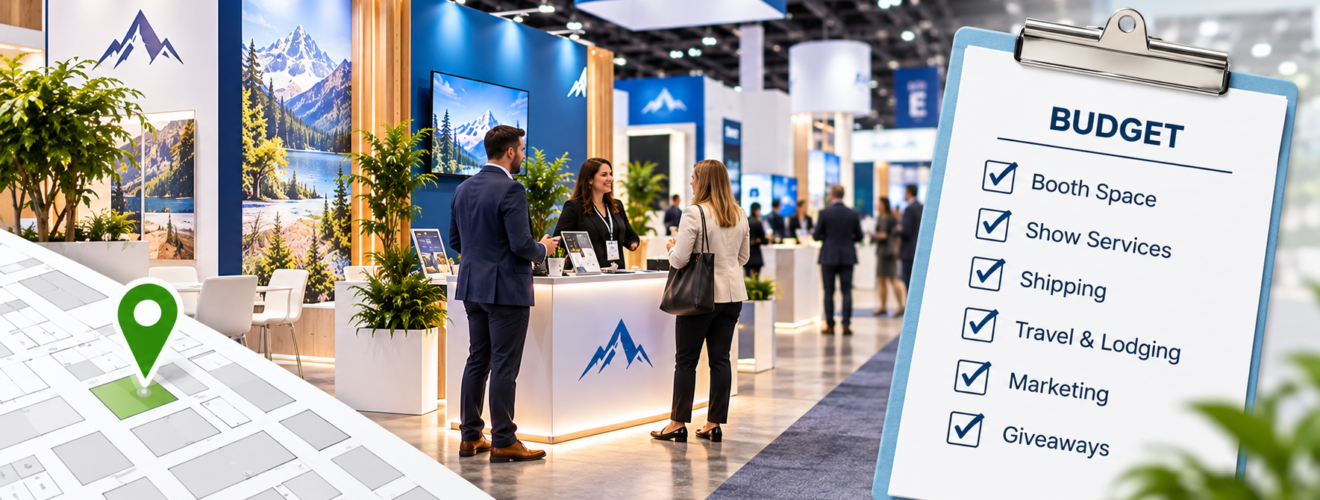
A trade show booth works when the display, the location and the budget are planned together. This guide covers what makes a good trade show display, how to pick (or make the most of) your booth location, what exhibiting really costs including the fees most people miss, which giveaways are worth it, and how B2B and B2C shows differ.
Whether it’s your first show or your fiftieth, use it as a checklist before you book the next one. Still deciding on size? Start with our guide to choosing a trade show booth size.
Why Trade Shows Still Matter
Face-to-face time is harder to get than ever, which makes it worth more. A trade show puts you in a room with buyers who came specifically to see products in your industry. You can demonstrate, answer questions and build trust in a few minutes that would take weeks over email.
Shows have changed, with more technology in booths, more reusable displays and more meetings booked before the doors open. The purpose hasn’t: meet qualified buyers in person and move them closer to a sale.
What Makes a Good Trade Show Display?
A successful trade show display is the foundation of your exhibition strategy, acting as a visual magnet and functional workspace. Effective displays capture attention, communicate your brand message clearly, and create an inviting environment for visitor engagement.
Essential Elements of High-Impact Displays
Bold, clear visual communication is key. Your display must be visible and readable from at least 20 feet away, requiring strategic use of large-format graphics, high-contrast colors, and legible typography.
Clear messaging hierarchy is vital. Communicate your primary value proposition within five seconds. Prioritize your most important message prominently, followed by supporting information. Avoid clutter.
Modular and scalable booth components offer significant advantages for multiple shows. These systems adapt to different booth sizes and configurations, maintaining consistency and providing better ROI through reuse. 10×10 displays, 10×20 displays, and 20×20 displays can all be configured from modular systems.
Interactive elements are increasingly important. Product demonstrations, touchscreens, VR experiences, and hands-on activities create memorable experiences, differentiate your booth, and help qualify leads.
Strategic lighting design enhances visual impact and atmosphere. Professional lighting highlights products, creates depth, and ensures visibility. Use ambient, accent, and task lighting combinations.
Design Principles for Maximum Impact
Simplicity is paramount. Clean, uncluttered designs are more effective in a visually stimulating environment. Focus on one primary message or product to ensure clarity and memorability.
Color psychology plays a crucial role. Different colors evoke emotional responses and influence behavior. Choose colors aligning with your brand personality and target audience.
Strategic use of white space creates visual breathing room, drawing attention to key elements. Well-balanced designs appear sophisticated and easy to navigate, unlike chaotic, overcrowded displays.
Typography selection impacts readability and brand perception. Choose fonts easily readable from various distances. Sans-serif fonts generally work best. Limit to two or three font families for consistency.
Technology Integration and Modern Trends
Modern trade show displays increasingly incorporate digital technology for engaging experiences. Large LED screens and video walls display dynamic content, but technology should enhance, not overshadow, your message.
Augmented reality (AR) and virtual reality (VR) are becoming accessible, offering immersive product experiences or virtual tours. Thoughtfully implemented, AR/VR can create buzz and social media sharing.
Mobile integration is essential. QR codes provide instant access to information or offers. Mobile apps facilitate lead capture and scheduling. Ensure mobile elements are user-friendly and valuable.
Sustainability is increasingly important. Companies prioritize eco-friendly materials, reusable components, and energy-efficient lighting. Sustainable displays reduce environmental impact and appeal to conscious attendees.
Curious where AI fits in? Read “What AI Can and Can’t Do for Trade Show Booth Design”.
Choosing the Best Booth Location
Your trade show booth’s location is as crucial as its design for event success. Prime locations significantly increase foot traffic, lead generation, and ROI.
High-Traffic Locations
Most coveted locations are near main entrances and primary traffic arteries, ensuring consistent visibility. Booths along main aisles receive significantly more foot traffic.
Corner and intersection booths offer exceptional visibility from multiple directions, allowing for larger signage and design creativity.
Proximity to food courts, lounges, and networking areas is beneficial, attracting attendees who linger, providing more opportunities for casual interactions.
Strategic positioning near anchor exhibitors or industry leaders can leverage their draw, capturing overflow traffic for smaller companies.
Locations to Avoid
Avoid dead-end aisles and back corners, which receive minimal foot traffic.
Steer clear of restrooms, loading docks, or service areas due to noise, odors, and disruption.
Locations behind structural obstructions (pillars, beams) severely limit visibility and accessibility.
Avoid booths directly adjacent to loud competitors or entertainment areas unless high-energy is your goal; excessive noise hinders conversations.
Maximizing Any Location’s Potential
If assigned a less-than-ideal location, create compelling reasons for attendees to seek your booth.
Pre-show marketing is critical. Use email, social media, and industry publications to promote special offers, overcoming location disadvantages.
Directional signage and wayfinding elements (floor graphics, hanging signs) guide visitors to your booth from main traffic areas. Banner stands can be effective for directional signage.
Partnerships with nearby exhibitors create mutual benefits, increasing overall traffic to your area through collaborative promotions.
Trade Show Budgeting: A Comprehensive Guide
Understanding costs and developing realistic budgets are essential for maximizing ROI and avoiding unexpected expenses. Trade show budgeting involves numerous cost categories.
Comprehensive Cost Breakdown
Booth space rental (30-35% of budget) is the largest expense, varying by show prestige, location, and size.
Exhibit design and construction (18-25%) include graphic design, fabrication, and furniture. Modular systems help control these costs. Consider rental displays for cost-effective solutions.
Travel and lodging (10-20%) cover airfare, ground transport, hotels, and meals for staff. Early booking minimizes expenses.
Show services (10-15%), like electrical, internet, cleaning, and security, are often underestimated but essential for functionality.
Marketing and promotional expenses (5-15%) include advertising, giveaways, printed materials, lead capture systems, and special events.
Hidden Costs and Considerations
Many underestimate full expenses. Shipping costs ($2,000-$5,000) vary by size, weight, and distance.
Drayage fees, charged by show contractors for moving materials, can add significant unexpected costs, typically calculated by weight.
Labor costs for setup/dismantling ($2,500-$5,000) depend on complexity and local rates. Union requirements can increase costs.
Storage costs between shows add up. Consider ongoing storage when evaluating total ownership cost.
Budget Optimization Strategies
A multi-show strategy optimizes budget through economies of scale. Modular display systems allow reconfigurable, high-quality components, reducing custom fabrication needs.
Early planning and booking result in significant savings. Early bird discounts and advance service orders provide substantial savings.
Power your booth for less
If you’re running a backlit display, a TV, or laptops and tablets, a portable power station can cover some or all of it. Add up the watts of everything you plan to plug in and choose a battery with enough capacity for a full show day. Charge and run times vary by model and by how much you power, and some venues limit battery packs, so check your show’s rules first.

Power Battery For Trade Show Displays & Booths
Sharing costs with partners or subsidiaries makes larger displays feasible, reducing individual company costs while increasing impact.
Types of Trade Shows: Finding Your Fit
Understanding different trade show types is crucial for selecting events aligned with your business objectives, target audience, and marketing strategy.
Business-to-Business (B2B) Trade Shows
B2B shows are industry-specific events connecting businesses, suppliers, and distributors. They focus on relationship building, lead generation, and showcasing products to decision-makers.
Attendees are typically purchasing managers, technical specialists, and business owners, often with pre-planned meetings. Lead quality is generally higher, with shorter conversion cycles.
B2B strategies emphasize expertise, ROI, and detailed product specifications. Booth design and messaging should convey professionalism and industry knowledge. Case studies and detailed product demonstrations are effective.
Popular B2B shows include CES, Automechanika Shanghai (185,000 visitors), and Guangzhou International Lighting Exhibition (200,000+ professionals).
Business-to-Consumer (B2C) Trade Shows
B2C shows target end consumers for direct sales, brand awareness, and education. They feature diverse audiences and an energetic, entertainment-focused atmosphere.
B2C strategies prioritize visual appeal, lifestyle messaging, and emotional connections over technical specs. Booth design should be inviting, interactive, and Instagram-worthy.
Product demonstrations and hands-on experiences are effective, allowing consumers to interact directly. Sampling, contests, and giveaways attract visitors and create positive brand associations.
The sales cycle is typically much shorter, with many purchases happening on-site. This requires staffing with emphasis on sales skills and customer service.
Exhibiting at an outdoor event or festival? Use our outdoor trade show booth checklist.
Hybrid and Mixed-Format Events
This category includes hybrid events combining B2B and B2C elements, and virtual/mixed-format trade shows. They recognize that many industries serve both business and consumer markets.
Hybrid shows offer opportunities to reach both B2B and B2C audiences simultaneously, providing broader market exposure. However, they require more sophisticated booth design, messaging, and staff training.
Virtual and mixed-format events combine in-person elements with online components, extending reach beyond physical attendees. These often include virtual booth tours and digital networking.
Strategies to Stand Out on the Trade Show Floor
In the competitive environment of a trade show, standing out requires strategic planning, creative execution, and understanding what motivates your target audience.
Creating Memorable First Impressions
Visual hierarchy plays a crucial role. Your most important message should be prominently displayed at eye level and readable from 20 feet away. Supporting information should be organized logically.
Color psychology and contrast significantly impact visibility. Ensure high contrast between text and background colors for readability. Strategic use of accent colors draws attention.
Movement and animation naturally attract attention. This might include rotating displays, digital screens, or live demonstrations. Movement should enhance your message, not distract.
Leveraging Technology for Engagement
Interactive technology is crucial for engaging experiences. Touchscreen displays allow visitors to explore information and provide valuable data about their interests.
Virtual and augmented reality experiences can transport visitors into immersive environments. These are effective for complex products or services requiring visualization.
Live streaming and social media integration can extend your reach. Host live demonstrations or expert interviews to encourage social sharing.
Mobile integration through QR codes or mobile apps provides seamless ways to access information or schedule meetings. These enable better lead tracking.
The Power of Human Connection
Despite technology, human interaction remains the most powerful differentiator. Your booth staff represents your brand and can make or break the visitor experience.
Staff training should focus on engagement techniques that feel natural and helpful. The best staff act as consultants, asking thoughtful questions and providing solutions.
Proactive engagement strategies ensure interested visitors don’t pass by. Position staff at the front, use conversation starters, or offer brief demonstrations.
Body language and approachability significantly impact engagement. Staff should maintain open postures, make eye contact, and appear genuinely interested.
Trade Show Giveaways That Work
Promotional merchandise serves as a powerful tool for attracting visitors and reinforcing brand messages. Effectiveness depends on strategic selection, quality, and alignment with your audience.
Most Popular and Effective Trade Show Giveaways
Pens and writing instruments remain popular due to universal utility and affordability. High-quality pens create better impressions.
Tote bags and reusable shopping bags offer excellent brand visibility and practical value. They provide brand exposure long after the show.
Water bottles and drinkware are popular due to environmental consciousness and practical need. They provide high perceived value and maximize brand visibility.
Technology accessories are high-impact items, particularly for B2B audiences. Portable phone chargers and USB drives provide high perceived value and utility.
Unique and Memorable Giveaway Ideas
Branded coasters made from wood or marble offer a sophisticated alternative, providing ongoing brand exposure and demonstrating quality.
Seed paper bookmarks and plantable items appeal to environmentally conscious audiences, creating a lasting connection with positive environmental action.
Personalized notebooks and journals provide excellent utility for business audiences, ensuring ongoing brand exposure in professional contexts.
Augmented Reality (AR) cards represent cutting-edge technology, creating unique and memorable experiences with interactive digital layers.
Strategic Distribution and Timing
Effective distribution impacts success. Use promotional items as rewards for specific actions like providing contact information or scheduling meetings.
Timing distribution throughout the show can manage booth traffic and create urgency. Limited quantities or time-specific giveaways create excitement.
Staff training on distribution should emphasize strategic value. Staff should understand how to use items as conversation starters and lead qualification tools.
Are Trade Shows Worth It?
Many businesses question whether trade shows provide sufficient ROI. Evidence overwhelmingly supports their continued value when executed strategically.
The Numbers Don’t Lie: Trade Show ROI Statistics
Yes, when you plan for the return instead of hoping for it. Most of the payoff comes from what happens around the booth: promoting it before the show, training the people who staff it, and following up on every lead within days, not weeks.
For the step-by-step version, read how to maximize your trade show ROI, written for small and medium businesses.
Conclusion: Your Path to Trade Show Success
Trade shows remain a powerful marketing channel when approached strategically. The key is maximizing value through careful planning and execution.
Companies with 5-10% lead conversion rates find investment profitable.
Success requires a comprehensive approach: display design, location, budget, staff training, merchandise, and follow-up. Weakness in any area can undermine investment.
The future involves greater integration with digital marketing, enhanced technology, and sophisticated measurement. Companies embracing these trends will succeed.
Whether planning your first show or optimizing an existing program, these principles provide a foundation for superior results. Approach trade show marketing as a strategic business investment.
Frequently Asked Questions
How much does it cost to exhibit at a trade show?
Most exhibitors spend roughly $10,000 to $30,000 per show once booth space, the display, shipping, travel and show services are added up. A quick way to estimate: multiply the cost of your booth space by three.
What is drayage?
Drayage, also called material handling, is the fee the show’s general contractor charges to move your shipment from the loading dock to your booth and back out after the show. It’s usually billed by weight, so a lighter, more compact display can lower it.
Which booth locations get the most traffic?
Booths near main entrances, along main aisles, on corners and close to food courts or lounges see the most foot traffic. Dead-end aisles, back corners, spots behind pillars and areas near loading docks see the least.
How far ahead should I order my trade show display?
For most APG displays, plan on 10 to 12 business days from the time we receive print-ready artwork until the display is delivered. Build in about three weeks so there’s time for any artwork changes. Here’s the full ordering process.
Not sure which display fits your booth space or budget? Contact our team and we’ll help you choose.
